Working in explosive atmospheres requires special care and expertise. EU regulations form the foundation for worker safety: The European Framework Directive 89/391/EEC on Safety and Health of Workers at Work obliges employers to implement measures to improve the safety and health of employees, while the ATEX Workplace Directive 1999/92/EC sets out specific requirements for explosive atmospheres. These obligations are implemented through national legislation and highlight the employer’s responsibility to ensure that employees are familiar with the risks of their work environment and safe working practices. This requires systematic, regular, and role-specific training and training to ensure employees can act safely in all situations.
Training obligations cover multiple roles
ATEX training is not only for those who work directly within an explosive atmosphere. It should be provided for everyone whose tasks relate to or who move within these areas:
- Production and maintenance personnel
- Supervisors and managers
- New employees and substitutes before starting work
- External contractors and service providers
- Cleaning, facility, and security services
The scope and level of detail of the training must be adjusted according to the role and responsibilities. For example, maintenance personnel need more in-depth technical knowledge, while cleaning staff only require practical guidance on safe working practices.
What should ATEX training include?
Legislation requires employers to ensure that every employee receives adequate training in safety and health matters, specifically tailored to their workstation or role. ATEX training ensures that each employee recognizes the risks associated with explosive atmospheres in the workplace and knows how to act both in daily operations and in emergencies. Training must answer the key question: What risks exist in the work environment, and how are they managed? Effective training combines up-to-date information with practical instruction.
The content may vary depending on the role, but typical topics include:
- The contents of the explosion protection document and its practical implications
- ATEX zoning and what it means from the worker’s perspective
- Recognizing Ex-area markings, warning signs, and their practical significance
- Safe working practices and protective equipment
- Emergency situations and how to act in the event of an accident or hazard
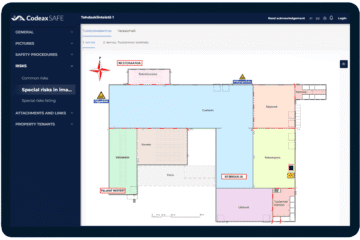
Employees do not need to memorize the entire explosion protection document, but they must understand the risks relevant to their own tasks in hazardous areas. Training is most effective when it is interactive, ensuring that knowledge is truly absorbed. Visual aids such as site maps, photos, and practical examples support learning. Particularly impactful are exercises that simulate emergencies and allow workers to practice responding as if in a real situation.
When and how often should training be organized?
Safety training is not a one-time exercise. Since conditions, equipment, and work practices can change, ATEX competence must also be regularly updated. Even experienced employees need periodic refreshers and new information, for example on technical developments or updated safety procedures.
Good times to provide training and induction include:
- Before a new employee starts work
- When zoning or conditions change in the area
- When new equipment, materials, or methods are introduced
- Annually or periodically as refresher training
- Following identified deficiencies, incidents, or near misses
Good training practices are based on a clear plan and schedule that defines who trains, when, how, and what topics are covered. In addition, every training session should be documented, including participants, content, and date. This supports learning, continuous development, and enables employers to demonstrate compliance when required.
Building a culture of safety together
High-quality, role-specific, and regular training is a vital part of ensuring workplace safety. When potentially explosive atmospheres have been identified in the workplace, ATEX training equips employees with the skills to work safely in these environments.
While organizing training is a legal obligation for employers, a comprehensive and effective safety culture is built together. A safe work environment is the result of shared attitudes, open communication, and a collective commitment to looking out for one another.