Managing information about the locations of hazardous materials is a critical part of workplace and property safety. First and foremost, storage areas for chemicals, flammable liquids, and gases should be clearly marked on-site. Use proper signage and warning labels so they can be identified quickly when moving around the facility. In addition, it is essential to keep location data up to date and easily accessible on floor plans, so that the information can be understood at a glance even without visiting the site. In this blog, we explain why this matters, what risks can result from missing information, and how such data can be presented clearly and visually.
Risks when information is missing
When the locations of chemicals, flammable liquids, or gases are not clearly known, risks increase. This affects personal safety, property, and business continuity. In accidents or leaks, the fire and rescue services need immediate and precise knowledge of where hazardous substances are stored. If the information is fragmented or missing, rescue operations can be delayed. This increases the risk of injuries and damage.
Unclear storage data can lead to incompatible substances being stored too close to each other. This raises the risk of ignition or dangerous reactions. Workers may unknowingly be exposed to harmful substances, resulting in health issues such as poisoning, respiratory problems, or burns. Everyday operations may also be compromised if it is unclear where materials should be handled and stored. Inadequate information can prolong accident investigations and recovery measures, slow down insurance processes, and cause significant financial losses.
Benefits of clear and visible location information
When storage sites are clearly identified and easy to locate, safety improves significantly. This applies across all levels of the organization. In accidents or leaks, fire and rescue services can respond faster and target their actions correctly, reducing the risk of damage and injuries. Company staff are also better equipped to avoid hazardous areas and act safely in emergencies when the information is readily available.
Clear location data is equally beneficial in everyday operations. When everyone knows where hazardous materials are stored and handled, risks drop. Many issues can be prevented before they occur. This reduces unnecessary transfers and improper storage, both of which can lead to accidents. The information also supports training and orientation. New employees adopt safe practices faster when chemical locations and related instructions are clearly documented and visible.
Well-documented and marked storage sites also help organizations meet regulatory requirements. Authorities often require detailed information about the locations and quantities of hazardous materials. Up-to-date records simplify inspections, audits, and reporting. In addition, accurate data streamlines internal processes such as planning maintenance and inspections.
Codeax®SAFE provides a visual and versatile way to present information
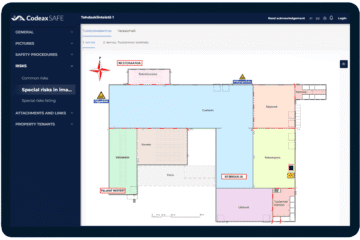
With Codeax SAFE, hazardous material locations are presented visually on a facility’s floor plan, making risk areas identifiable at a glance. Floor plans can include icons for gas cylinders, flammable liquids, and chemical storage areas. This information can be shared via link, QR code, or printed copies with staff, contractors, and emergency services.

Each icon can also be linked to an information card containing text, attachments, and links, such as safety instructions, work procedures, or safety data sheets. This way, the data goes beyond just the location, consolidating all relevant safety information in one place. When instructions, regulations, and documents are easy to find, the risk of missing critical information or losing it in complex document folders is reduced. This supports both safe daily operations and rapid response in emergencies, as the right information is always within reach.

Keeping data current is also an essential part of safety, and with Codeax SAFE, updates are quick and simple. Any changes in storage locations, quantities, or handling practices can be recorded immediately, preventing hazards and errors that outdated information might cause. Regular checks and updates ensure that everyone has access to reliable, up-to-date information for both daily work and exceptional situations.
Clear information supports safety
Visual presentation makes information easier to grasp and more practical than a plain text list. Clear and visual representation of the locations of hazardous materials supports safety every day and can help save lives in the event of an accident. With Codeax SAFE, information doesn’t remain buried in paper documents. It is presented in an understandable and easily shareable form for everyone who needs it.